

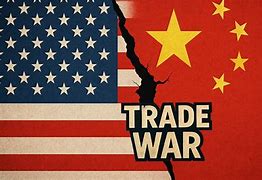
U.S.-China Trade War: Economic Consequences for Global Markets.
Introduction
What happens when the world’s two largest economies lock horns over trade? The U.S.–China trade war isn’t just a bilateral tug-of-war—it’s a global earthquake. In 2025, as tariffs deepen and supply chains realign, the question many ask is: what are the economic consequences for global markets? In this article, we’ll unpack how this trade war is reshaping economies, sectors, and supply chains, and why global markets are paying close attention.
We’ll cover:
-
A quick recap of the trade war and trade data.
-
Major consequences for global markets;
-
Sectoral and regional impacts;
-
Strategic responses for businesses and investors;
-
And finally, what this means for you in a world of evolving trade patterns.
Let’s jump in.
The U.S.–China Trade War: Background & Latest Numbers
What’s going on?
The trade war between the U.S. and China began in earnest in 2018, but by 2024-25 it has morphed into something far bigger: a clash over tariffs, supply-chain dominance, technology, and global influence.
Latest trade data
-
In 2024, the U.S. goods trade deficit with China was about $295.5 billion.
-
U.S. goods exports to China in 2024 were $143.2 billion, down about 3% from 2023. U.S. imports from China were $438.7 billion, up about 2.7%.
-
The Organization for Economic Co‑operation and Development (OECD) lowered its global growth forecast to 2.9% for 2025-26, citing trade tensions.
Tariffs and ripple effects
-
Average U.S. tariffs on Chinese products jumped from roughly 2.9% to nearly 24.9% between 2018 and 2019.
-
Analysis shows under “full + retaliation” scenarios, global welfare losses could hit around -1.2% and trade volumes could drop ~5%.
Global Markets at Risk: Major Consequences for Global Markets
Growth slowdown & trade volume contraction
Global markets are being squeezed. Supply disruption, elevated costs and uncertainty are dragging down growth. The OECD’s downward revision illustrates how global markets are paying the price.
Key consequences include:
-
Reduced investment as companies hesitate.
-
Slower global trade flows as tariffs raise hurdles.
-
Market volatility as the risk premium grows.
Supply-chain shock & rerouting
One of the biggest impacts: companies are no longer confident that China → U.S. just-in-time will hold. Supply-chain rerouting toward ASEAN, Mexico, and other “China + 1” spots is accelerating.
Table: Supply chain shifts
| Region/Approach | Change observed | Impact on global markets |
|---|---|---|
| ASEAN (Vietnam, Thailand etc.) | Rising share of exports to U.S. | New winners in manufacturing |
| Mexico/Canada | More indirect Chinese-value exports | Trade through third-party routing |
| China domestic market | Greater internal focus | Less reliance on U.S. demand |
Commodity & agricultural market disruption
Global commodity markets feel the heat. For example, the soybean trade between the U.S. and China has been deeply affected. An analysis suggests U.S. oilseed exports to China could collapse under sustained tariffs.
Failed trade flows in key agriculture sectors ripple globally:
-
Price volatility for countries dependent on U.S. exports.
-
Shifts in crop patterns and increased risk for agribusiness markets.
Regional and Sectoral Impact — Who Wins? Who Loses?
U.S. markets and global investor sentiment
In the U.S., tariffs and trade uncertainty are translating into lower business confidence and investment pauses. The OECD noted growth damping down for the U.S. to around 1.6% in 2025 under current policies.
Stock markets get jittery: when the tariff conflict flared in 2025, global indices plunged.
China’s adaptation and global repositioning
China’s economy is more resilient than many expected, but not immune. It still depends on exports, though less directly to the U.S.—only around 3% of China’s economy is tied to U.S. final demand.
China is:
-
Pivoting to domestic consumption and alternative export markets.
-
Strengthening trade links with ASEAN, Africa, Latin America.
-
Facing risk of slower growth if U.S. tariffs remain persistent.
Emerging markets & third-party nations
While U.S. and China grab headlines, emerging markets are both beneficiaries and victims:
Winners: Nations like Vietnam, Thailand and Mexico benefit from supply-chain redirection.
Losers: Countries tied to U.S./China trade flows may lose export markets or face higher input costs.
Specific sectors under stress
-
Technology / semiconductors: U.S. restrictions on Chinese chip access leak risk into global markets.
-
Agriculture: U.S. farmers lose access to China; global soybean flows alter. (See above)
-
Manufacturing & export-oriented industries: Higher tariffs = higher costs = reduced competitiveness.
-
Financial markets: Heightened risk leads to capital flight to safe assets; global markets more volatile.
Strategic Responses: What Businesses and Investors Should Do
For businesses
-
Diversify supply chains: adopt “China + 1” strategies rather than all-in on China.
-
Build flexibility: inventory buffers, alternate sourcing, adaptable logistics.
-
Monitor tariff risks and develop scenarios: what if tariffs spike by 10-20 %?
For investors
-
Reassess risk: sectors heavily exposed to U.S.–China trade (tech, agriculture, manufacturing) may be more volatile.
-
Seek exposure to emerging markets benefiting from redirection of supply-chains (ASEAN).
-
Stay informed on policy: Trade policy shifts could trigger market swings.
Policy & country-level responses
Governments need to:
-
Support affected industries and workers facing trade shock.
-
Strengthen trade alliances outside U.S.–China duality (for resilience).
-
Monitor global trade-flow changes and adapt national strategies accordingly.
Why This Matters & What’s Next?
Broader significance
The U.S.–China trade war isn’t just bilateral—it signals a new era in global economics: geopolitics meets trade. Global markets are at a turning point.
Consider:
-
A near-decoupling between the U.S. and China would ripple across every economy, supply chain and investment decision.
-
Efficiencies built over decades (cheap labour, integrated manufacturing, globalised logistics) may be rewired.
-
Emerging markets and alternative trade hubs are gaining strategic value.
Upcoming turning points to watch
-
Whether a new trade deal will be struck or the tariffs become embedded long-term.
-
How quickly firms can redirect or restructure supply chains without sacrificing cost advantages.
-
How consumers react: Will higher costs feed inflation and slow markets?
-
What happens with global growth: If trade remains constrained, forecasts could slip even further.
Conclusion
The U.S.–China trade war is more than an economic spat between two nations. The economic consequences for global markets are deep and widespread. From slower growth, re-routed supply chains, sectoral disruptions and shifting winners and losers — global markets are recalibrating.
Companies, investors and policymakers must adapt. As I’ve walked you through: diversify, stay alert, move strategically. Because in this era of global trade upheaval, adaptability may well be the biggest competitive edge.
FAQ Section
Q1: How does the U.S.–China trade war affect global markets?
A1: The trade war raises costs for firms, disrupts supply chains, slows investment and weakens global growth — forcing companies to reroute sourcing and investors to reassess risk.
Q2: Can global supply chains survive the U.S.–China tariff escalation?
A2: Yes — but not unchanged. Many firms adopt “China + 1” strategies, shifting manufacturing to ASEAN or Mexico, which alters trade flows and market dynamics.
Q3: What are the latest figures for U.S.–China trade in 2024?
A3: In 2024, U.S. goods exports to China were ~$143 billion (-3% vs 2023) and imports from China were ~$438.7 billion (+2.7%). The trade deficit stood near $295.5 billion.
Q4: Which sectors are hit hardest by the trade war in 2025?
A4: Manufacturing, technology (semiconductors), agriculture (oilseeds/soybeans) and global export-oriented industries are particularly vulnerable to tariffs, supply-chain shifts and market uncertainty.
Q5: Are there winners from the U.S.–China trade war?
A5: Yes. Countries positioned to take over manufacturing from China (e.g., Vietnam, Thailand) and regions integrated with U.S. supply-chains like Mexico are benefiting from the redirection of trade flows.
Q6: What should investors do in response to the trade war?
A6: Investors should diversify geographically, evaluate companies’ exposure to U.S.–China trade risk, favor markets gaining from supply-chain shifts, and monitor policy developments closely.
Share this article if you found it useful — and let’s stay ahead of how the global economy is evolving.


