

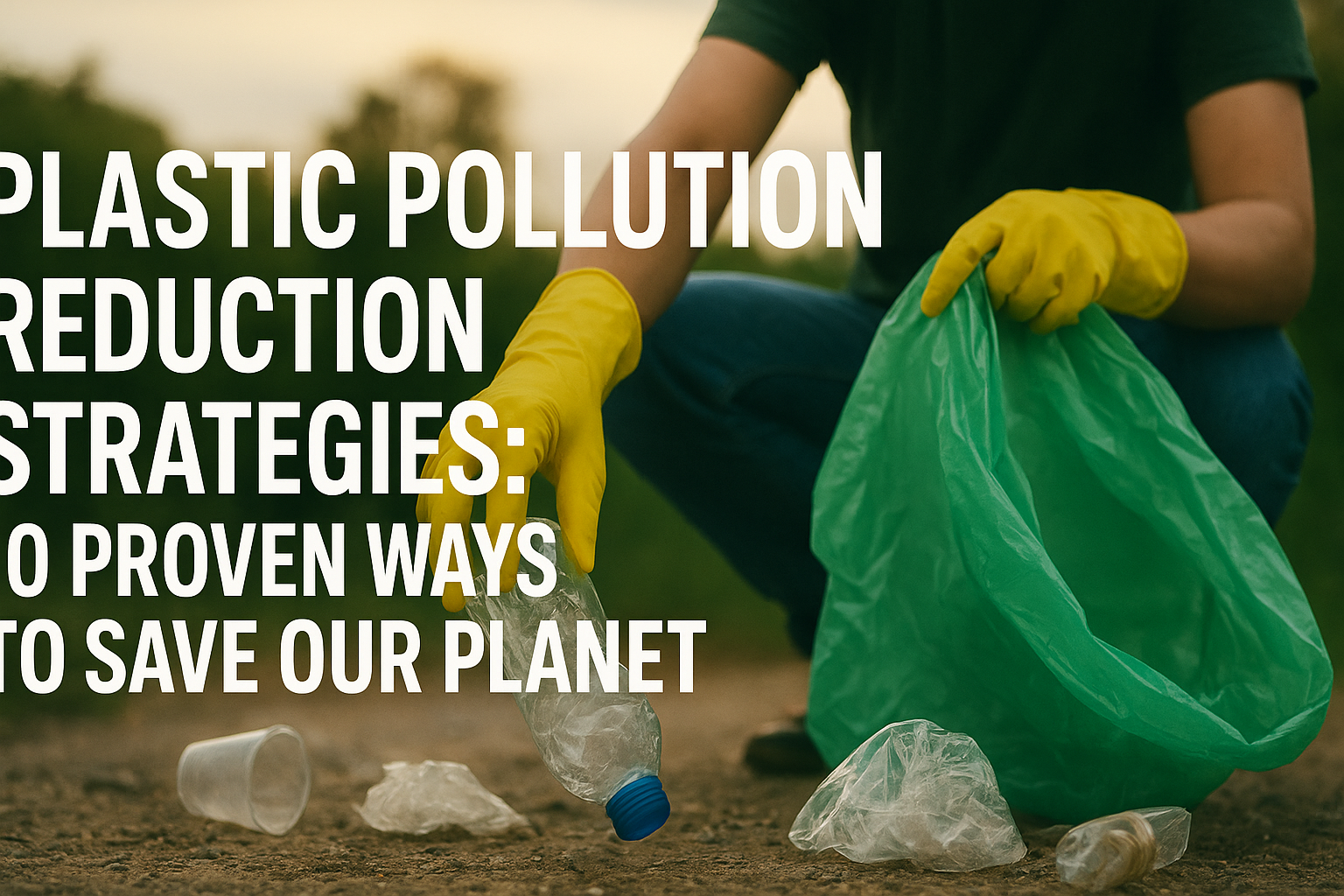
Plastic Pollution Reduction Strategies: 10 Proven Ways to Save Our Planet
Introduction:
Have you ever wondered if your daily choices could actually make a difference in the fight against plastic pollution? Every minute, the equivalent of one garbage truck full of plastic enters our oceans. This staggering reality demands immediate action, but here’s the good news: effective plastic pollution reduction strategies exist, and they’re working right now across the globe.
From innovative government policies to grassroots community movements, the battle against plastic waste has entered a new phase in 2025. Understanding and implementing these proven strategies isn’t just about environmental responsibility—it’s about securing a livable future for the next generation.
Understanding the Scope of Plastic Pollution in 2025
Plastic pollution has reached crisis levels, with recent data from the United Nations Environment Programme revealing that global plastic production has doubled in the past two decades. Currently, over 400 million tons of plastic waste are generated annually, and this number continues climbing without comprehensive intervention.
The environmental impact extends far beyond visible litter. Microplastics now contaminate every ecosystem on Earth, from the deepest ocean trenches to Arctic snow. Research published in 2024 found microplastic particles in human blood samples, highlighting how this pollution directly affects human health alongside environmental damage.
Marine ecosystems bear particularly devastating consequences. Scientists estimate that by 2050, ocean plastic could outweigh all fish if current trends continue. Sea turtles, whales, and seabirds frequently ingest plastic debris, mistaking it for food, leading to starvation and death. Coral reefs, already stressed by climate change, face additional threats from plastic contamination.
The economic toll reaches into the billions annually. Coastal communities lose tourism revenue due to polluted beaches, while fishing industries suffer from damaged equipment and declining fish populations. The World Bank estimates that plastic pollution costs the global economy approximately $2.5 trillion each year when accounting for environmental damage, health impacts, and cleanup efforts.
Understanding these consequences motivates urgent implementation of plastic pollution reduction strategies at every level—from individual actions to international agreements. The good news? Effective solutions already exist and are showing measurable results were properly applied.
Government-Led Plastic Reduction Strategies That Work
National and local governments worldwide have implemented policies demonstrating significant success in reducing plastic waste. These regulatory approaches provide blueprints for effective plastic pollution reduction strategies.
Single-Use Plastic Bans: Over 100 countries have enacted some form of single-use plastic ban as of 2025. Canada’s comprehensive ban on checkout bags, cutlery, and straws, implemented in 2023, has already reduced plastic waste by an estimated 23,000 tons annually. The European Union’s Single-Use Plastics Directive has similarly achieved measurable reductions across member states.
Extended Producer Responsibility (EPR) Programs: EPR policies shift waste management costs from municipalities to manufacturers, incentivizing companies to design more sustainable packaging. France’s EPR framework, expanded in 2024, requires producers to finance collection and recycling of their plastic products. This approach has increased recycling rates while reducing overall plastic production.
Plastic Taxation and Fees: Economic disincentives effectively reduce consumption. The United Kingdom’s plastic packaging tax, charging £200 per ton for packaging containing less than 30% recycled content, has driven manufacturers toward sustainable alternatives. Similar taxation models in Norway and Denmark have achieved 15-20% reductions in plastic packaging use.
Deposit-Return Schemes: These programs incentivize consumers to return plastic bottles for refunds. Germany’s highly successful pfand system achieves over 97% return rates for beverage containers. Scotland’s deposit-return scheme, launched in 2024, has already diverted millions of plastic bottles from landfills and ocean pathways.
Public Procurement Policies: Governments leveraging purchasing power to demand sustainable products create market shifts. The United States federal government’s commitment to eliminate single-use plastics from operations by 2027 influences supplier behavior and normalizes plastic-free alternatives across industries.
These governmental plastic pollution reduction strategies demonstrate that regulatory frameworks, when properly designed and enforced, create systemic change beyond what individual action alone can achieve.
Community-Based Plastic Reduction Initiatives
Grassroots movements and community-led initiatives represent powerful plastic pollution reduction strategies that complement governmental policies while fostering local engagement and ownership.
Beach and River Cleanup Programs: Organizations like Ocean Conservancy coordinate annual cleanup events involving millions of volunteers worldwide. These efforts remove tons of plastic waste while generating data about pollution sources. The 2024 International Coastal Cleanup collected over 18 million pounds of trash from waterways across 100 countries.
Plastic-Free Community Campaigns: Cities and towns worldwide have adopted plastic-free commitments. Penzance, UK, became one of Europe’s first plastic-free towns, with local businesses voluntarily eliminating single-use plastics. This grassroots model has inspired over 1,000 communities globally to pursue similar transformations.
Refill and Reuse Networks: Community refill stations for household products reduce packaging waste significantly. The UK’s Refill app connects users with businesses offering free water bottle refills and package-free shopping options. Since its 2024 expansion, the network has prevented an estimated 50 million plastic bottles from entering waste streams.
Educational Outreach Programs: Schools and community centers implementing plastic awareness education create lasting behavioral change. Programs teaching children about plastic’s environmental impact and alternatives have proven particularly effective, as students influence family purchasing decisions and carry sustainable habits into adulthood.
Zero-Waste Stores and Markets: Community-supported zero-waste retail options provide practical alternatives to plastic-packaged goods. These businesses allow customers to bring reusable containers for bulk purchases of food, cleaning products, and personal care items. The zero-waste retail sector grew by 47% between 2023 and 2025, driven by consumer demand for plastic-free shopping.
Neighborhood Composting Programs: Community composting initiatives divert organic waste from plastic garbage bags while producing valuable soil amendments. These programs reduce household waste volume, decreasing the need for plastic trash bags and supporting local urban agriculture projects.
Community-based plastic pollution reduction strategies succeed because they engage citizens directly, creating social norms around sustainable behavior while providing practical alternatives to plastic-dependent lifestyles.
Corporate Plastic Reduction and Circular Economy Solutions
Business sector innovation in plastic pollution reduction strategies demonstrates that profitability and sustainability can align when companies commit to meaningful change.
Sustainable Packaging Innovation: Major corporations have invested heavily in alternative materials. Unilever announced plans to halve virgin plastic use by 2025, developing paper-based packaging for personal care products. Coca-Cola’s investment in plant-based bottles made from 30% plant material represents significant progress toward renewable packaging solutions.
Product Redesign for Reusability: Companies embracing refillable models reduce single-use packaging dramatically. Loop, a circular shopping platform partnering with major brands, delivers products in durable containers that customers return for cleaning and refilling. This model has prevented millions of disposable packages from entering waste streams since its 2023 expansion.
Plastic Credit Systems: Similar to carbon credits, plastic credit programs allow companies to fund collection and recycling of plastic equivalent to their usage. This market-based approach channels corporate resources toward waste management infrastructure in regions lacking adequate systems, particularly in developing nations.
Supply Chain Transparency: Blockchain technology enables tracking plastic throughout supply chains, holding companies accountable for waste reduction commitments. Several multinational corporations now publish annual plastic footprint reports, creating competitive pressure for continuous improvement in plastic pollution reduction strategies.
Investment in Recycling Technology: Corporate funding for advanced recycling methods addresses plastic waste that traditional mechanical recycling cannot process. Chemical recycling technologies, which break plastics down to molecular components for remanufacturing, received over $6 billion in corporate investment during 2024.
Collaborative Industry Initiatives: Sector-wide commitments accelerate change. The New Plastics Economy Global Commitment, signed by over 500 organizations representing 20% of all plastic packaging produced globally, establishes shared targets for elimination, innovation, and circulation of plastic products.
These corporate plastic pollution reduction strategies demonstrate that business leadership, driven by consumer pressure and regulatory requirements, plays a crucial role in systemic transformation away from plastic dependency.
Individual Actions for Plastic Waste Reduction
Personal choices collectively create significant impact when millions of individuals adopt plastic pollution reduction strategies in daily life.
Embrace Reusable Alternatives: Switching to reusable shopping bags, water bottles, coffee cups, and food containers eliminates substantial single-use plastic waste. An average person using reusable bags prevents approximately 22,000 plastic bags from entering waste streams over their lifetime.
Support Plastic-Free Products: Consumer purchasing power shapes market offerings. Choosing products with minimal or no plastic packaging sends powerful market signals. The growth of plastic-free personal care items—solid shampoo bars, bamboo toothbrushes, and refillable deodorants—reflects consumer-driven demand.
Practice Proper Recycling: Understanding local recycling guidelines ensures plastic actually gets recycled rather than contaminating recycling streams. Cleaning containers, removing labels, and separating different plastic types increases recycling efficiency. However, reducing consumption remains more effective than recycling alone.
Refuse Single-Use Items: Declining unnecessary plastic items—straws, cutlery, excessive packaging—at points of purchase directly reduces demand. Restaurants and retailers respond to consistent customer requests for plastic-free options by adjusting their practices.
Participate in Cleanup Activities: Joining local cleanup efforts removes existing pollution while building community awareness. Even individual litter collection during daily walks contributes to reducing plastic that might otherwise enter waterways.
Advocate for Policy Change: Contacting elected representatives about plastic pollution, supporting environmental organizations, and voting for candidates prioritizing sustainability amplifies individual impact beyond personal consumption choices.
Make Conscious Food Choices: Selecting loose produce over pre-packaged items, shopping at farmers markets, and choosing products in glass or paper packaging reduces household plastic waste significantly. Meal planning and buying in bulk further minimizes packaging needs.
These individual plastic pollution reduction strategies, while seemingly small in isolation, create collective force when adopted widely, demonstrating that personal responsibility complements rather than replaces the need for systemic solutions.
Innovative Technologies Tackling Plastic Pollution
Technological advancement offers promising plastic pollution reduction strategies that address both existing waste and future production challenges.
Advanced Sorting and Recycling Systems: Artificial intelligence and robotics improve recycling facility efficiency dramatically. Optical sorting systems using machine learning identify and separate plastic types with 95% accuracy, far exceeding manual sorting. This technology enables recycling of previously unrecyclable mixed plastics.
Chemical Recycling Breakthroughs: Unlike mechanical recycling which degrades plastic quality, chemical recycling converts plastic waste into virgin-quality materials. Pyrolysis and gasification technologies break down polymers into basic molecules, allowing infinite recycling loops. Commercial-scale chemical recycling facilities processed over 200,000 tons of plastic waste in 2024.
Biodegradable Plastic Alternatives: New materials mimicking plastic properties while decomposing naturally show promise. PHA (polyhydroxyalkanoates) produced by bacterial fermentation biodegrades completely in marine environments. While production costs remain higher than conventional plastics, scaling production brings prices toward competitiveness.
Ocean Cleanup Technologies: Innovative systems like floating barriers and autonomous collection vessels remove plastic from ocean gyres and river mouths. The Ocean Cleanup project has removed over 500,000 kilograms of plastic from the Great Pacific Garbage Patch since 2023, preventing further ecosystem damage while providing recyclable materials.
Plastic-Eating Enzymes: Scientists have engineered enzymes that break down PET plastic into component molecules within hours. These biological solutions could revolutionize plastic waste treatment, though commercial applications remain in development stages. Initial trials demonstrate effectiveness on various plastic types previously considered non-recyclable.
Blockchain Waste Tracking: Distributed ledger technology creates transparent waste management systems, ensuring plastic reaches proper recycling or disposal facilities. This accountability reduces illegal dumping and provides data driving more effective plastic pollution reduction strategies.
These technological innovations complement behavioral and policy approaches, offering tools to address plastic pollution at scales matching the problem’s magnitude while creating economic opportunities in the growing circular economy sector.
Creating a Comprehensive Plastic Reduction Action Plan
Implementing effective plastic pollution reduction strategies requires coordinated approaches integrating governmental policy, corporate responsibility, community engagement, and individual action.
Assessment and Goal Setting: Begin by measuring current plastic consumption and waste generation. Organizations and communities should conduct waste audits identifying primary plastic sources and setting specific, measurable reduction targets. The SMART framework—specific, measurable, achievable, relevant, and time-bound—ensures accountability.
Multi-Stakeholder Collaboration: Successful plastic pollution reduction strategies involve partnerships across sectors. Local governments, businesses, nonprofits, and community groups each contribute unique resources and expertise. Establishing formal collaboration mechanisms, such as sustainability councils or working groups, facilitates coordinated action.
Infrastructure Development: Adequate waste management infrastructure proves essential. Investments in collection systems, sorting facilities, and recycling operations must accompany consumption reduction efforts. Regions lacking basic waste management require foundational infrastructure before advanced solutions become feasible.
Education and Awareness Campaigns: Sustained communication about plastic pollution impacts and solutions drives behavioral change. Effective campaigns use multiple channels—social media, schools, workplaces, and community events—reinforcing messages about why and how to reduce plastic use.
Policy Alignment: Ensuring regulations support rather than hinder reduction efforts require policy review and reform. Eliminating subsidies for virgin plastic production while incentivizing recycled content and alternative materials creates economic conditions favoring sustainable choices.
Monitoring and Adaptation: Regular evaluation of strategy effectiveness allows course correction. Tracking metrics like waste generation rates, recycling percentages, and plastic leakage into environments provides data for continuous improvement. Successful programs adapt based on results rather than rigidly following initial plans regardless of outcomes.
Long-Term Investment: Plastic pollution reduction requires sustained commitment beyond short-term projects. Budgeting for multi-year initiatives, developing permanent infrastructure, and institutionalizing sustainable practices ensures durability of achievements.
This comprehensive approach recognizes that isolated actions, while valuable, achieve maximum impact when integrated into cohesive strategies addressing plastic pollution’s systemic nature across all societal levels.
The Global Perspective: International Cooperation on Plastic Pollution
Plastic pollution transcends national boundaries, demanding international cooperation and coordinated plastic pollution reduction strategies at the global scale.
Global Plastic Treaty Negotiations: The United Nations Environment Assembly initiated negotiations for a legally binding international treaty on plastic pollution in 2024. This historic agreement, when finalized, will establish global standards for plastic production, use, and disposal, similar to the Paris Agreement for climate change. Over 170 countries participate in these negotiations, recognizing that plastic pollution requires collective action.
Transboundary Waste Management: International plastic waste trade has historically shifted pollution burdens from developed to developing nations. The Basel Convention amendments strengthening controls on plastic waste exports prevent this environmental injustice. Countries now face greater responsibility for managing waste generated within their borders.
Technology and Knowledge Transfer: Developing nations often lack resources for advanced waste management systems. International cooperation facilitating technology transfer and capacity building helps regions most affected by plastic pollution implement effective solutions. Organizations like UN-Habitat support sustainable waste management infrastructure development in rapidly urbanizing areas.
Shared Research and Data: Global monitoring networks track plastic pollution patterns, sources, and impacts. This scientific cooperation informs evidence-based policy development worldwide. The Global Plastic Action Partnership coordinates research efforts, ensuring data availability guides international plastic pollution reduction strategies.
Finance and Investment Mechanisms: Addressing plastic pollution globally requires substantial investment, particularly in developing economies. International development banks and climate finance mechanisms increasingly fund waste management infrastructure projects, recognizing connections between plastic pollution, climate change, and sustainable development.
Corporate Accountability Across Borders: Multinational corporations operating globally face increasing pressure to maintain consistent sustainability standards worldwide rather than exploiting weaker regulations in some regions. International agreements establishing minimum requirements for corporate plastic responsibility prevent regulatory arbitrage.
This global cooperation recognizes that plastic pollution, like climate change, demands solutions matching the problem’s planetary scale, with shared responsibility reflecting both historical contributions and current capabilities.
Frequently Asked Questions About Plastic Pollution Reduction Strategies
What are the most effective plastic pollution reduction strategies?
The most effective plastic pollution reduction strategies combine multiple approaches: government bans on single-use plastics, extended producer responsibility programs, community-based cleanup and education initiatives, corporate investment in sustainable packaging alternatives, and individual adoption of reusable products. Research shows that integrated strategies addressing production, consumption, and waste management simultaneously achieve the greatest reductions. Single solutions alone prove insufficient, but comprehensive programs implementing 5-10 complementary strategies can reduce plastic pollution by 40-60% within five years according to UN Environment Programme data.
How can individuals reduce their plastic waste at home?
Individuals can reduce household plastic waste through several practical steps: replace single-use items with reusable alternatives like cloth shopping bags, stainless steel water bottles, and glass food containers; buy products with minimal packaging or shop at zero-waste stores allowing refills; choose loose produce instead of pre-packaged items; refuse plastic straws, utensils, and excessive packaging at points of purchase; and properly recycle unavoidable plastic following local guidelines. An average household implementing these changes can reduce plastic waste by 70% within one year while often saving money through reduced consumption.
What role do governments play in reducing plastic pollution?
Governments implement crucial plastic pollution reduction strategies including regulatory bans on problematic single-use items, plastic taxation creating economic disincentives, mandatory recycled content requirements for manufacturers, extended producer responsibility programs shifting waste management costs to producers, investment in recycling infrastructure, and public education campaigns. Effective governmental action creates systemic change impossible through individual efforts alone. Countries with comprehensive plastic policies like Germany, South Korea, and Rwanda have achieved national plastic waste reductions exceeding 40% compared to pre-intervention baselines.
Are biodegradable plastics a good solution to plastic pollution?
Biodegradable plastics offer partial solutions but require careful evaluation. True biodegradable materials like PHA decompose in natural environments within months, addressing pollution from items inevitably entering ecosystems. However, many products labeled “biodegradable” require specific industrial composting conditions unavailable in most locations, effectively functioning as conventional plastics in practice. Additionally, biodegradable production still consumes resources and energy. They work best as targeted solutions for specific applications—agricultural mulch, food service ware, medical supplies—rather than wholesale plastic replacements. Reducing overall consumption remains more effective than substituting materials.
How long does it take to see results from plastic reduction strategies?
Timeline for results varies by strategy type and scale. Individual habit changes produce immediate waste reduction measurable within weeks. Community initiatives show significant impacts within 6-12 months. Government policies typically demonstrate measurable effects within 1-2 years of implementation, with full impacts emerging over 3-5 years as infrastructure develops and behaviors normalize. Corporate transformation toward sustainable packaging requires 3-7 years given supply chain complexity. Ocean cleanup efforts show gradual progress over decades given accumulation volume. However, preventing new pollution through upstream strategies produces faster, more cost-effective results than cleaning existing waste.
What happens to plastic waste that isn’t properly disposed of?
Improperly disposed plastic waste follows several destructive pathways. Land-based litter breaks into microplastics contaminating soil and groundwater, entering food chains and eventually human bodies. Plastic reaching rivers and oceans accumulates in garbage patches, killing marine life through ingestion and entanglement while breaking into microplastics consumed by fish and shellfish. Plastic burned in open dumps releases toxic chemicals including dioxins and furans causing respiratory disease and cancer. In landfills, plastic persists for centuries, leaching additives into surrounding environments. Only approximately 9% of all plastic ever produced has been recycled; 12% incinerated; and 79% accumulated in landfills or natural environments.
Conclusion: Your Role in the Plastic Pollution Solution
The path forward demands action at every level—from international treaties to daily choices about refusing that plastic straw. Plastic pollution reduction strategies work when implemented comprehensively, combining regulatory frameworks, technological innovation, corporate accountability, community engagement, and personal responsibility.
We stand at a critical juncture. The next decade will determine whether we successfully address this crisis or allow plastic pollution to cause irreversible damage to ecosystems and human health. The strategies outlined here provide a roadmap, but implementation requires collective commitment.
Your participation matters more than you might think. Every reusable bag used, every cleanup joined, every policy supported, and every conscious purchase made contributes to the solution. When millions of individuals make similar choices while demanding systemic change, transformation becomes inevitable.
Start today by identifying one plastic pollution reduction strategy you can implement immediately. Perhaps it’s carrying a reusable water bottle, supporting a local plastic-free initiative, or contacting representatives about stronger plastic regulations. Small actions, multiplied across communities and nations, create the momentum needed for global change.
The plastic pollution crisis resulted from decades of unsustainable practices, but reversal is possible through sustained, coordinated effort. We possess the knowledge, technology, and strategies needed for success. What remains is the collective will to act decisively before the window for effective intervention closes.
Future generations will judge our response to this challenge. Let’s ensure our legacy includes healthy oceans, thriving ecosystems, and a planet free from the plastic pollution that threatens life itself. The strategies exist—now comes implementation. Will you join the solution?


