

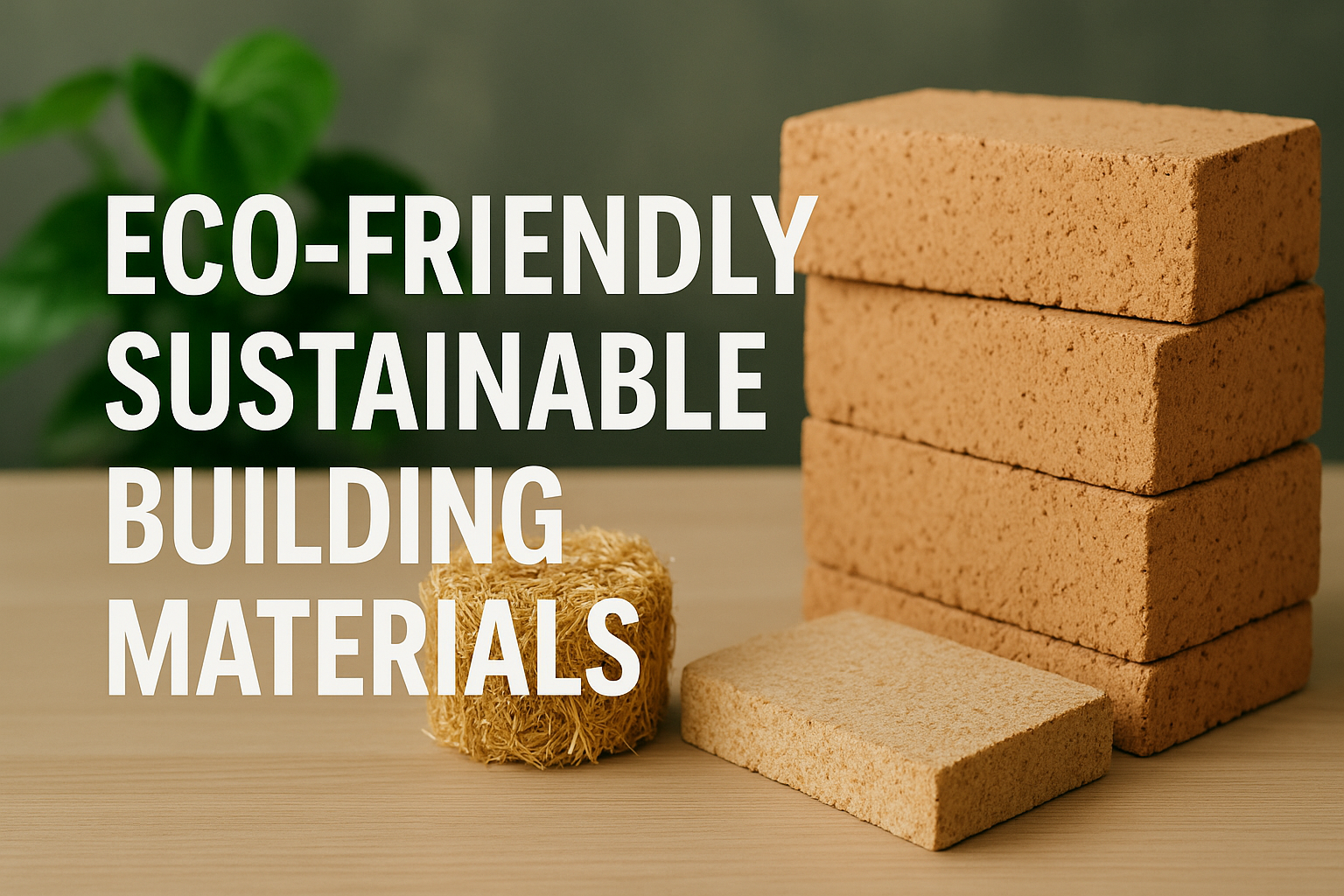
Eco-Friendly Sustainable Building Materials: Complete 2025 Guide to Green Construction
Introduction: Why Sustainable Building Materials Matter in 2025
Climate change has transformed how we approach construction. Traditional building practices contribute nearly 40% of global carbon emissions, making the shift toward eco-friendly sustainable building materials not just trendy but essential for our planet’s future.
Modern builders, architects, and homeowners are discovering that green building materials offer more than environmental benefits. These sustainable construction materials reduce energy costs, improve indoor air quality, and often outlast conventional alternatives. The construction industry is experiencing a revolution where sustainability meets profitability.
This comprehensive guide explores everything you need to know about eco-friendly building materials in 2025. Whether you’re planning a new home, renovating an existing structure, or simply curious about sustainable construction, you’ll discover practical options that benefit both your wallet and the environment.
What Are Eco-Friendly Sustainable Building Materials?
Sustainable building materials are products that minimize environmental impact throughout their entire life cycle. These green building materials prioritize renewable resources, reduced energy consumption during production, and recyclability at the end of their useful life.
The best eco-friendly construction materials share several key characteristics:
- Low embodied energy: Minimal energy required for extraction, manufacturing, and transportation
- Renewable or recycled content: Sourced from rapidly renewable resources or recycled materials
- Non-toxic composition: Free from harmful chemicals and volatile organic compounds (VOCs)
- Durability: Long-lasting performance that reduces replacement needs
- Local availability: Reduced transportation emissions through regional sourcing
Understanding life cycle assessment (LCA) helps evaluate a material’s true environmental footprint. This cradle-to-cradle approach considers extraction, production, transportation, installation, maintenance, and eventual disposal or recycling.
Top Sustainable Building Materials Transforming Construction in 2025
Bamboo: Nature’s Renewable Steel
Bamboo has emerged as one of the most versatile eco-friendly construction materials available today. This grass species grows incredibly fast, reaching maturity in just 3-5 years compared to hardwood trees that require 25-70 years.
Bamboo flooring offers remarkable durability rivaling traditional hardwoods. Its tensile strength exceeds steel in some applications, making it ideal for structural elements. Modern manufacturing techniques produce bamboo plywood and engineered products suitable for various construction applications.
The environmental benefits extend beyond rapid renewability. Bamboo plantations absorb five times more carbon dioxide than equivalent hardwood forests while releasing 35% more oxygen. This makes bamboo a carbon-negative material when properly harvested.
Reclaimed Wood: Beauty with History
Reclaimed wood represents the ultimate in circular economy materials. Salvaged from old barns, factories, and demolished buildings, this material reduces demand for virgin timber while preserving forests.
Beyond environmental advantages, reclaimed wood offers unique aesthetic appeal. The weathered patina and character marks tell stories that new materials cannot replicate. Architects and designers increasingly specify reclaimed wood for exposed beams, flooring, and accent walls.
Quality reclaimed materials often exceed new lumber in stability and density. Old-growth timber harvested centuries ago features tight grain patterns and superior structural properties no longer available from modern forests.
Hempcrete: The Carbon-Negative Wonder Material
Hempcrete blocks are revolutionizing sustainable construction with their remarkable carbon-sequestering properties. This bio-composite material combines hemp hurds (the woody core of hemp stalks) with lime-based binders to create lightweight, insulating building blocks.
During growth, hemp plants absorb significant atmospheric carbon dioxide. When combined with lime plaster in hempcrete production, the material actually stores more carbon than was emitted during manufacturing. This makes hempcrete one of the few truly carbon-negative building materials.
Hempcrete construction offers excellent thermal and acoustic insulation properties. The material regulates humidity naturally, creating healthier indoor environments while preventing mold growth. While not load-bearing, hempcrete provides superior infill for timber-framed structures.
Cross-Laminated Timber (CLT): The Future of Mass Timber
Mass timber construction, particularly cross-laminated timber, is transforming high-rise building possibilities. CLT panels consist of multiple wood layers stacked perpendicular to each other and bonded with structural adhesives.
This engineered wood product offers strength comparable to steel and concrete while storing carbon throughout the building’s lifespan. FSC-certified wood and PEFC-certified wood ensure responsible forest management practices.
Recent projects demonstrate CLT’s versatility, with timber buildings now exceeding 18 stories worldwide. The material’s lighter weight reduces foundation requirements, while prefabrication accelerates construction timelines by 25% compared to conventional methods.
Recycled Steel Framing: Strength Meets Sustainability
Steel remains infinitely recyclable without quality degradation. Recycled steel framing utilizes approximately 90% recycled content, making it one of the most sustainable structural materials available.
The recycling process requires 75% less energy than producing new steel from virgin ore. This dramatic energy reduction translates directly into lower carbon emissions and reduced environmental impact.
Modern steel framing systems integrate seamlessly with other sustainable building materials. The dimensional stability prevents warping, twisting, or settling that can compromise building envelope performance over time.
Sustainable Insulation Options for Energy Efficiency
Natural Fiber Insulation Solutions
Natural fiber insulation represents a growing category of eco-friendly building materials. Options include wool insulation, cellulose insulation made from recycled paper, and hemp fiberboard products.
Wool insulation offers exceptional performance with R-values comparable to fiberglass while naturally regulating moisture. The material resists fire, mold, and pests without chemical treatments. Sheep’s wool proves particularly effective in cold climates where moisture management prevents condensation issues.
Cellulose insulation, manufactured from recycled newspapers and cardboard, provides excellent thermal performance at competitive prices. The material typically contains 80% recycled content and requires significantly less embodied energy than mineral-based alternatives.
Cork Insulation: Mediterranean Sustainability
Cork flooring and cork insulation have gained popularity as sustainable construction materials. Harvested from cork oak bark without harming trees, this renewable resource regenerates every 9-12 years.
Cork’s cellular structure creates natural insulation properties with excellent acoustic performance. The material resists moisture, fire, and pests while contributing to healthy indoor air quality. Cork insulation works particularly well in exterior wall assemblies and underfloor applications.
Stone Wool and Mineral Wool Options
Stone wool insulation (also called mineral wool insulation) offers fire-resistant, durable thermal performance. Modern products feature low emissions formulations that minimize environmental impact during production.
These non-combustible materials provide critical fire protection in multi-family and commercial buildings. The dense fiber structure also delivers superior acoustic insulation, making mineral wool ideal for sound-sensitive applications.
Green Concrete Alternatives and Innovations
Traditional Portland cement production accounts for approximately 8% of global carbon emissions. Green concrete alternatives are addressing this challenge through innovative material substitutions.
Fly ash concrete alternatives utilize industrial byproducts from coal combustion, reducing waste while lowering cement content. These supplementary cementitious materials often improve concrete durability and workability.
Lime-based renders and lime plaster mixes offer traditional alternatives with lower environmental impact. Lime plaster naturally absorbs carbon dioxide during curing, partially offsetting production emissions. These breathable finishes work exceptionally well with natural wall systems like rammed earth walls and straw bale construction.
Aerated concrete blocks incorporate air bubbles during manufacturing, reducing material usage while improving insulation properties. The lightweight blocks simplify handling and reduce structural load requirements.
Non-Toxic Finishing Materials
Low-VOC Paints and Coatings
Indoor air quality depends heavily on finishing material selections. Low-VOC paints and VOC-free finishing products eliminate harmful off-gassing that affects occupant health.
Modern zero-VOC formulations perform identically to conventional paints while maintaining GREENGUARD certified materials standards. These non-toxic building materials prove particularly important in bedrooms, schools, and healthcare facilities.
Natural paints using mineral pigments and plant-based binders offer completely chemical-free alternatives. While typically more expensive, these products appeal to chemically sensitive individuals and those prioritizing absolute environmental purity.
Natural Plaster and Earth Finishes
Clay bricks and earth blocks create beautiful, breathable wall finishes. Natural plaster made from clay, sand, and natural fibers regulates humidity while adding thermal mass.
These lime-putty finishes develop unique patinas over time, aging gracefully unlike synthetic alternatives. The materials prove particularly compatible with rammed earth construction and straw bale walls.
Certification Standards and Material Selection
Understanding Green Building Certifications
Several certification systems help identify sustainable building materials. LEED material credits recognize products meeting specific environmental criteria, including recycled content, regional extraction, and low-emitting properties.
BREEAM material considerations evaluate environmental impact across multiple categories. The WELL building standard material requirements focus specifically on human health impacts, emphasizing non-toxic selections.
Look for products carrying third-party certifications from reputable organizations. These independent verifications ensure marketing claims align with actual environmental performance.
Evaluating Local and Regional Materials
Local/regional sustainable materials reduce transportation emissions while supporting community economies. Prioritizing materials sourced within 500 miles significantly lowers embodied energy.
Regional material availability varies by location. West Coast builders access abundant timber resources, while Southwest projects might emphasize rammed earth and adobe construction. Understanding your area’s sustainable material strengths enables smarter project planning.
Cost Considerations and Long-Term Value
Many people assume eco-friendly sustainable building materials cost significantly more than conventional alternatives. While some green products carry premium pricing, total cost analysis reveals different conclusions.
Durable low-maintenance materials reduce lifetime expenses through extended service life and minimal upkeep. Bamboo flooring, for example, lasts 25-30 years with proper care, comparable to hardwoods at lower initial cost.
Energy-efficient building assemblies reduce operating expenses through lower heating and cooling demands. The improved performance often offsets higher upfront material costs within 5-10 years through utility savings.
Additionally, green buildings command higher resale values and rental rates. Studies show LEED-certified properties sell for 2-5% premiums over comparable conventional buildings, reflecting market demand for sustainable features.
Implementation Strategies for Your Project
Working with Experienced Professionals
Successful sustainable construction requires knowledgeable team members. Seek architects, builders, and suppliers experienced with green building materials and techniques.
Professional expertise helps navigate unfamiliar materials and installation methods. Proper installation proves critical for performance; even excellent materials fail when incorrectly applied.
Phased Approaches for Renovations
Complete sustainable renovations can overwhelm budgets and schedules. Consider phased approaches focusing on highest-impact improvements first.
Priority areas typically include insulation upgrades, air sealing, and mechanical system replacements. These foundational improvements deliver immediate energy savings while preparing for future phases.
As budgets allow, transition to sustainable finishes and fixtures. This gradual approach makes green building accessible without requiring massive upfront investment.
Frequently Asked Questions
Q: Are sustainable building materials more expensive than conventional options?
A: Initial costs vary by material, but many sustainable options prove cost-competitive or cheaper long-term due to durability, energy savings, and reduced maintenance. Bamboo, reclaimed wood, and recycled steel often match or beat conventional material pricing.
Q: Do eco-friendly building materials perform as well as traditional materials?
A: Yes, modern sustainable building materials typically match or exceed traditional material performance. Cross-laminated timber rivals steel strength, bamboo matches hardwood durability, and hempcrete provides superior insulation compared to conventional walls.
Q: What are the easiest sustainable materials to incorporate in a renovation?
A: Low-VOC paints, bamboo flooring, recycled glass countertops, and cellulose insulation integrate easily into renovation projects without requiring specialized installation knowledge or significant structural modifications.
Q: How do I verify if a product is truly sustainable?
A: Look for third-party certifications like LEED, GREENGUARD, FSC, or PEFC. Review product environmental declarations and life cycle assessments. Research manufacturer sustainability practices and transparency.
Q: Can sustainable building materials work in all climates?
A: Yes, though material selection should match local conditions. Humid climates benefit from moisture-resistant options like cork and lime plaster, while cold regions prioritize high-performance insulation like wool and cellulose. Regional material availability also influences appropriate choices.
Q: Do sustainable buildings require special maintenance?
A: Most eco-friendly materials require equal or less maintenance than conventional alternatives. Natural materials like wood and bamboo need standard care, while durable options like recycled steel and cork often need minimal upkeep.
Conclusion: Building a Sustainable Future
Eco-friendly sustainable building materials represent more than environmental responsibility—they deliver superior performance, healthier indoor environments, and long-term economic value. The construction industry’s transformation toward sustainability reflects changing priorities where planetary health and human wellbeing converge.
Whether you’re building new, renovating existing structures, or simply planning future projects, sustainable materials offer practical solutions for every budget and application. From carbon-sequestering hempcrete to infinitely recyclable steel, today’s green building materials prove that environmental consciousness and construction excellence coexist beautifully.
The transition to sustainable construction begins with single material choices. Each eco-friendly selection contributes to reduced emissions, preserved resources, and healthier communities. As technology advances and adoption increases, sustainable building materials will become not the alternative, but the standard.
Start your sustainable building journey today. Research local suppliers, consult experienced green building professionals, and prioritize materials that align with your environmental values and project requirements. The planet—and your building’s future occupants—will thank you.


Great line up. We will be linking to this great article on our site. Keep up the good writing.
Fantastis situs yang Anda miliki, tapi saya penasaran apakah Anda tahu forum komunitas yang membahas topik yang sama seperti yang dibahas di artikel ini? Saya sangat ingin sekali menjadi bagian dari komunitas di mana saya bisa mendapatkan umpan balik dari individu yang berpengalaman dengan minat yang sama. Jika Anda punya saran, mohon beri tahu saya. Terima kasih!