

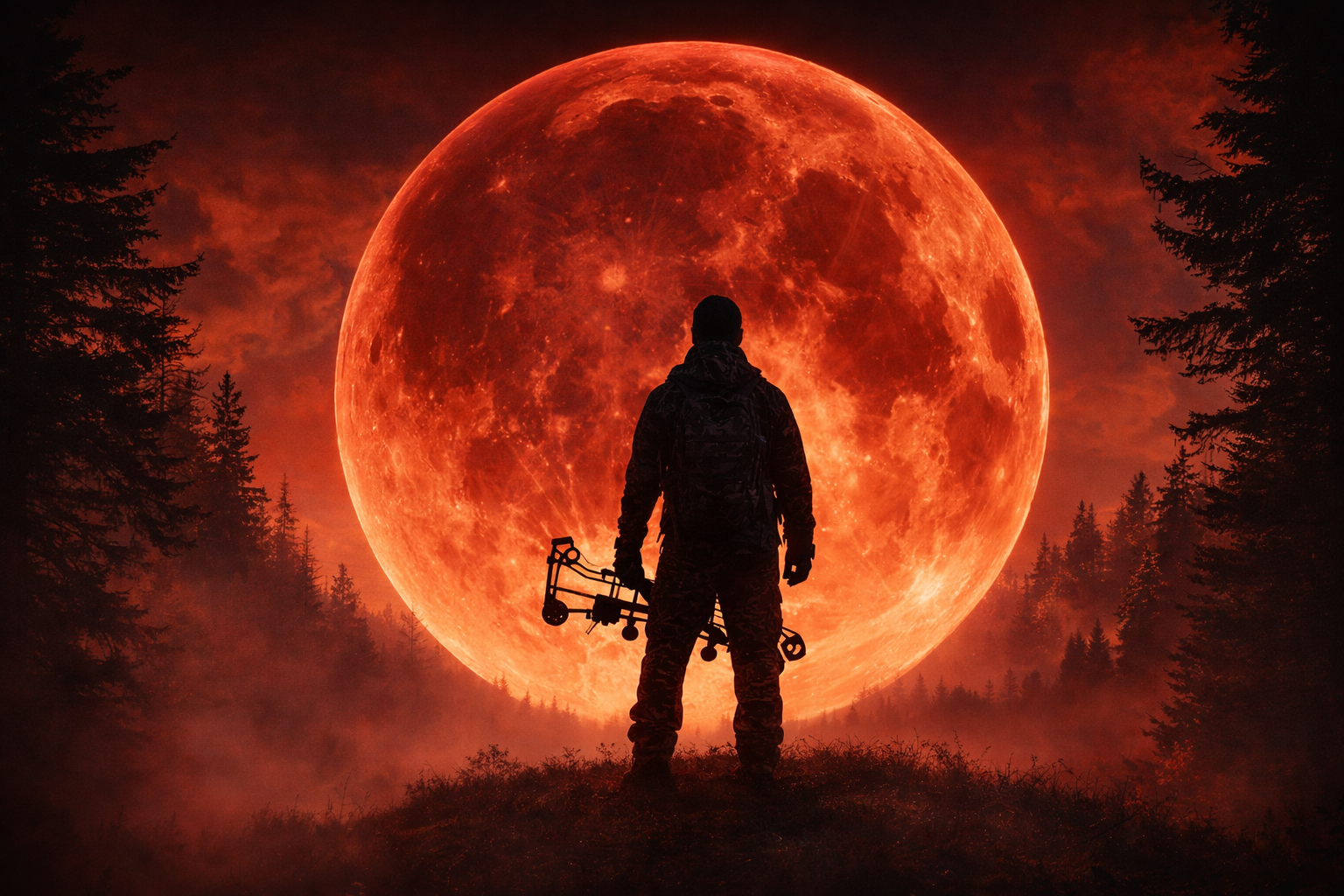
What Is the Red Moon for Hunting? Truth Every Hunter Must Know
Last Updated: March 2026 | By Daniel Brooks, Outdoor & Wildlife Writer
Picture this: you’re in your tree stand at 5 a.m. The sky glows a deep, blood-red orange. The woods feel different — alive, electric. Your pulse quickens. Is the red moon good or bad for hunting today?
The red moon, also called a blood moon, is one of the most debated phenomena among hunters. Some swear by it. Others dismiss it entirely. But the truth — backed by lunar science, wildlife behavior data, and decades of hunter experience — is far more fascinating than either camp admits.
In this guide, we break down exactly what the red moon means for hunting, how it affects deer movement and other wildlife, and how you can use lunar cycles to your advantage this season.
What Is the Red Moon? (And Why Hunters Pay Attention)
A red moon, commonly called a blood moon, occurs during a total lunar eclipse. During a lunar eclipse, Earth passes directly between the sun and the moon, casting its shadow over the moon’s surface. Rather than going dark, the moon turns a striking red or burnt-orange color — this happens because Earth’s atmosphere scatters shorter blue wavelengths of light while bending longer red wavelengths onto the moon’s surface.
According to NASA, total lunar eclipses can last anywhere from a few minutes to over an hour, making them a dramatic and extended atmospheric event. This isn’t the same as a regular full moon — it’s a full moon with a significant reduction in actual moonlight reaching Earth’s surface.
That distinction is critical for hunters. Why? Because moonlight intensity directly affects nocturnal animal behavior, including deer feeding patterns, predator movement, and overall wildlife activity.

Does a Red Moon Affect Hunting? The Science Behind It
So, does the red moon actually affect hunting? The short answer: yes, but not in the way most hunters expect.
Under a typical full moon, the night is bright enough that deer, predators, and other nocturnal animals move heavily at night and bed down closer to dawn. This is why many hunters report slow daytime activity during a standard full moon phase.
A red moon changes this equation. Since a lunar eclipse dramatically reduces light reaching the Earth — sometimes by more than 10,000 times compared to a full moon, according to NASA data — the forest essentially goes dark mid-night. This can trigger unexpected wildlife activity patterns.
Here’s what happens during a red moon hunting scenario:
- Deer feed heavily early in the night, expecting full moonlight, then become disoriented as darkness falls
- Nocturnal animals may shift activity closer to dawn or dusk — prime hunting hours
- Predators like coyotes and big cats can become more active and vocal during blood moon events
- Deer movement spikes at first light after a dark blood moon night, since animals look to feed before bedding
In essence, the red moon can reset the nocturnal clock for a night, pushing more animal movement into your shooting hours.
Red Moon vs. Full Moon: What’s the Real Difference for Deer Hunting?
Many hunters confuse the blood moon with a regular full moon. They are not the same and treating them identically is a costly mistake.
| Feature | Full Moon | Red Moon (Blood Moon) |
|---|---|---|
| Light Level | Maximum Brightness | Near-total darkness |
| Deer Night Activity | Very High | Disrupted/shifted |
| Dawn Activity Next Day | Low–moderate | High — great for hunters |
| Duration | All night | 1–3 hours (eclipse phase) |
| Hunting Strategy | Hunt near bedding | Hunt feeding areas at dawn |
The National Deer Association notes that moon phase is one of the top five environmental factors influencing deer movement, alongside temperature, barometric pressure, wind, and food availability. A blood moon eclipse combines the moon phase influence with a sudden environmental disruption — making it uniquely unpredictable and uniquely rewarding for prepared hunters.
Moon Phases and Deer Movement: A Hunter’s Full Guide
Understanding the red moon starts with understanding the full lunar cycle. The moon completes one full cycle roughly every 29.5 days, passing through eight phases. Each phase affects deer movement differently.
🌑 New Moon
- Darkest nights of the month
- Deer moves heavily at night with low risk of being seen
- Daytime movement is moderate
- Good for: All-day sits near food sources
🌓 First Quarter
- Moderate light, increasing each night
- Deer begins shifting toward nocturnal patterns
- Good for: Morning hunts near bedding areas
🌕 Full Moon
- Maximum brightness: deer move heavily overnight
- Daytime activity often slows dramatically
- Good for: Hunting evening feeding edges very late in shooting light
🌘 Last Quarter
- Decreasing light; deer begin returning toward daytime patterns
- Often one of the most overlooked great hunting windows
- Good for: Pre-dawn and mid-morning sits
🔴 Blood Moon (Red Moon / Lunar Eclipse)
- Occurs only during a full moon phase
- Light disruption causes behavioral reset
- Dawn feeding activity often peaks the morning after
- Good for: Dawn sits on field edges and food plots the day after
Pro tip from experienced hunters: Mark blood moon dates on your hunting calendar. The morning after a total lunar eclipse is often one of the most active dawn windows of the entire season.
Red Moon Spiritual Meaning for Hunters: Tradition and History
Beyond science, the red moon carries deep cultural weight in hunting traditions. Many Indigenous American tribes viewed the blood moon as a powerful sign tied to the natural world. For Plains tribes who relied on bison and deer hunting, a blood moon was often interpreted as a signal to prepare — animals would behave differently, and hunters needed to be alert.
The Harvest Moon — the full moon closest to the autumnal equinox — also holds special significance. Historically, this moon gave farmers and hunters extra hours of light to work by, extending their activity window in September and October. When a Harvest Moon also happens to be a blood moon, as occurred in rare years like 2015 and will again in future cycles, hunters describe unusually charged mornings in the field.
Whether you follow the spiritual tradition or stick purely to science, one thing is clear: hunters who pay attention to lunar cycles consistently outperform those who don’t.
Best Moon Phase for Deer Hunting in 2026
If you’re planning your 2026 deer season around lunar cycles, here’s what to know:
- The rut season (peak deer breeding) typically aligns with November in most of North America — and this year, the November full moon falls in a favorable window for morning rut activity
- For blood moon hunters, check NASA’s lunar eclipse calendar at eclipse.gsfc.nasa.gov for confirmed total lunar eclipse dates in 2026
- The single most underrated hunting window remains the 3–5 days before a full moon, when deer begin feeding aggressively in preparation for a brightly-lit night
According to data compiled by the National Deer Association, bucks are 2–3 times more likely to be on their feet during daylight in the days leading up to a full moon during rut season compared to the full moon itself. Plan accordingly.
Practical Hunting Tips for Red Moon Nights and Mornings
Here’s how to maximize your success when a blood moon hits during your hunting season:
- Hunt the morning after — This is your golden window. Deer fed in disrupted conditions overnight and will be active at first light
- Focus on feeding areas — Food plots, oak flats, and crop field edges are your best bets the morning after a blood moon
- Watch for predator activity — Coyotes become highly active during and after blood moons; this flushes deer and creates unpredictable movement
- Stay patient — Blood moon effects are short-term. If deer activity is low the day of, the following morning typically compensates
- Check barometric pressure — Combine lunar data with a rising barometer for the single best daytime deer movement conditions
Conclusion: What the Red Moon Really Means for Hunting
So, what is the red moon for hunting? It’s a total lunar eclipse that dramatically reduces moonlight, disrupts nocturnal feeding patterns, and — if you plan for it correctly — delivers some of the most active dawn hunting windows of the entire season.
The blood moon isn’t magic. It’s science. Wildlife behavior follows predictable patterns, and the red moon bends those patterns in a hunter’s favor when you know where to be and when to be there.
Mark your lunar calendar, study the moon phases, and trust the science. The woods don’t lie — and neither does a glowing red moon at 3 a.m.
📢 Found this helpful? Share it with your hunting crew and bookmark it for your 2026 season prep.
Frequently Asked Questions (FAQ)
Q1: What is the red moon for hunting?
A: The red moon, or blood moon, is a total lunar eclipse where Earth’s shadow turns the moon deep red. It dramatically reduces moonlight, disrupting nocturnal deer feeding patterns and often triggering strong deer movement at dawn the following morning.
Q2: Does a red moon affect deer movement?
A: Yes. During a blood moon, reduced light causes deer to cut short their nighttime feeding. This typically results in heightened deer activity at first light the next morning, making dawn sits especially productive.
Q3: Is a blood moon good or bad for deer hunting?
A: Generally good — especially for morning hunts. The night of a blood moon may be slow due to the light disruption, but the morning after is often one of the best feeding-area windows of the entire season.
Q4: What is the best moon phase for deer hunting?
A: The 2–4 days before a full moon during rut season are widely considered the best. Deer feed aggressively in anticipation of brighter nights. A new moon phase also produces strong nighttime movement that carries into dawn hours.
Q5: How does the Harvest Moon affect hunting?
A: The Harvest Moon — the full moon nearest the fall equinox — extends light into September and October evenings. Deer are more active during these extended light periods, making evening hunts on field edges highly productive.
Q6: Where can I find the 2026 blood moon hunting dates?
A: NASA’s official eclipse calendar at eclipse.gsfc.nasa.gov lists all confirmed lunar eclipse dates for 2026 and beyond. Cross-reference with your local hunting season calendar for the best planning.


