

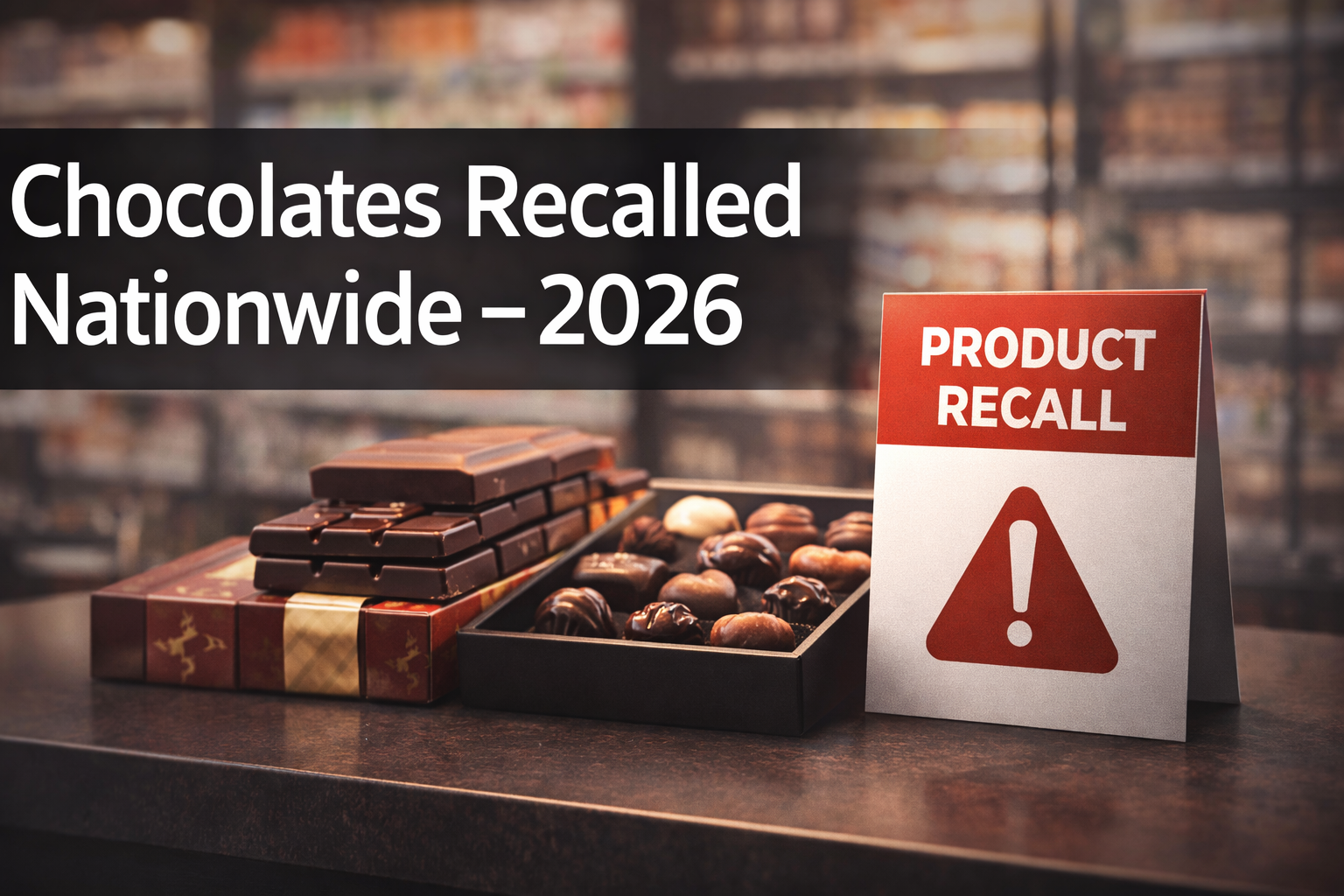
Chocolates Recalled from Stores Nationwide
Introduction: A Sweet Treat Turned Serious Safety Concern
Imagine unwrapping your favorite chocolate bar, ready to indulge, only to discover it could pose a serious health risk. Unfortunately, this scenario became reality for thousands of Americans in early 2026 when multiple chocolate products were recalled from stores nationwide.
The U.S. Food and Drug Administration (FDA) issued urgent consumer advisories after discovering that several popular chocolate brands contained undeclared allergens and potential contamination concerns. This chocolate recall nationwide USA has affected major retailers including Walmart, Target, Costco, Kroger, and Whole Foods, prompting immediate action from consumers and health officials alike.
Understanding which chocolates are being recalled nationwide, why these recalls happened, and what steps you should take can protect you and your family from potential health risks. This comprehensive guide covers everything you need to know about the latest chocolate recall news, affected lot numbers, and consumer safety measures.
What Triggered the Nationwide Chocolate Recall in 2026?
The recent chocolate recalls USA stemmed from several critical manufacturing defects and mislabeled ingredients that posed significant health threats to consumers. Here’s what went wrong:
Undeclared Allergens: The Primary Culprit
The most pressing issue involves undeclared allergens that weren’t properly listed on product packaging. According to the FDA’s food recall database, several chocolate manufacturers failed to disclose the presence of:
- Peanuts and tree nuts in products marketed as nut-free
- Milk proteins in dairy-free chocolate alternatives
- Soy lecithin not mentioned on ingredient labels
- Wheat gluten in supposedly gluten-free varieties
For individuals with peanut allergy, milk allergy, or other food sensitivities, consuming these mislabeled ingredients could trigger severe allergic reactions, including anaphylaxis. The Centers for Disease Control and Prevention (CDC) emphasizes that even trace amounts of allergens can be life-threatening for highly sensitive individuals.
Contamination Concerns Beyond Allergens
Beyond allergen issues, some recalled chocolate brands faced additional contamination concerns:
Salmonella risk: Several dark chocolate products tested positive for salmonella bacteria during routine Food Safety and Inspection Service (FSIS) inspections. Salmonella contamination can cause severe gastrointestinal illness, particularly in children, elderly individuals, and those with compromised immune systems.
Listeria contamination: Trace amounts of listeria monocytogenes were detected in certain chocolate-covered nuts and fruit products. This pathogen poses serious risks to pregnant women and can lead to miscarriage or stillbirth.
Foreign material contamination: Some manufacturers discovered small metal fragments or plastic pieces in production batches, prompting voluntary recall actions to prevent choking hazards and injuries.
Complete List of Recalled Chocolate Brands and Products
The chocolate recall list continues to expand as manufacturers identify additional affected lot numbers. Here are the major brands involved in this recall announcement:
Major Retail Brands Under Recall
Premium Chocolate Collections: Multiple artisan and premium chocolate makers issued product recall notices for their specialty collections sold at Trader Joe’s, Whole Foods, and Amazon Fresh. These products were distributed across all 50 states.
Store-Brand Chocolates: Several private-label chocolate products from major grocery stores nationwide have been pulled from shelves. Retailers including Aldi, Kroger, and Target removed their house-brand chocolate bars, truffles, and seasonal items.
Seasonal and Holiday Chocolates: Valentine’s Day chocolate boxes and Easter candy collections manufactured between December 2025, and January 2026 represent a significant portion of recalled items.
How to Identify Affected Products
Checking lot numbers is crucial for determining whether your chocolates are part of the recall. Here’s what to look for:
- Lot codes stamped on packaging: Typically found on the back or bottom of packages
- Best-by dates: Products with dates between March 2026 and September 2026 are most likely affected
- UPC barcodes: Cross-reference these with the FDA’s updated recall list available on their official website
The FDA maintains a searchable food recall database where consumers can enter product information to verify recall status.
What Are the Health Risks Associated with Recalled Chocolates?
Understanding the potential health risk helps you recognize symptoms and seek appropriate medical attention if needed.
Allergic Reaction Symptoms
If you’ve consumed recalled chocolate containing undeclared allergens, watch for these warning signs:
- Hives, skin redness, or itching
- Swelling of lips, tongue, or throat
- Difficulty breathing or wheezing
- Nausea, vomiting, or stomach cramps
- Dizziness or loss of consciousness
Severe allergic reactions require immediate emergency medical attention. Call 911 if symptoms progress rapidly or if the person has a known severe allergy.
Foodborne Illness Indicators
Salmonella risk and listeria contamination produce different symptoms:
Salmonella symptoms (appearing 6-72 hours after consumption):
- Diarrhea and abdominal pain
- Fever and chills
- Headache and muscle aches
- Dehydration
Listeria symptoms (appearing 1-4 weeks after exposure):
- Fever and muscle aches
- Headache and confusion
- Loss of balance
- Convulsions in severe cases
Pregnant women should contact their healthcare provider immediately if they consumed potentially contaminated chocolate products, even without symptoms.
What Should You Do If You Purchased Recalled Chocolate?
Taking immediate action protects your health and ensures proper consumer safety compliance.
Step-by-Step Consumer Action Plan
1. Stop consumption immediately: Don’t eat any chocolate products matching the recall description, even if they appear normal.
2. Check your pantry thoroughly: Review all chocolate items for affected lot numbers and best-by dates. Don’t forget chocolate chips, baking chocolate, hot cocoa mixes, and chocolate-covered snacks.
3. Separate recalled items: Place identified products in a sealed bag away from other foods to prevent cross-contamination.
4. Document your purchase: Locate receipts, if possible, though most retailers accept returns without proof of purchase for recalled items.
5. Return products for refunds: Take recalled chocolates back to the store where purchased. Major retailers like Walmart, Target, and Costco are offering full refunds or exchanges.
6. Report adverse reactions: If you experienced any health issues after consuming recalled chocolate, report it to the FDA’s MedWatch program. Your report helps track outbreak patterns and improves food safety.
Can You Return Recalled Chocolate Without a Receipt?
Yes, most major retailers participating in this voluntary recall are accepting returns without receipts due to the public health nature of this consumer advisory. Stores prioritize consumer safety over standard return policies during nationwide recalls.
Why Are Chocolates Being Recalled? Understanding Root Causes
Manufacturing defect issues and systemic failures led to this widespread chocolate recall update. Industry experts point to several contributing factors:
Supply Chain Complications
The complexity of modern chocolate production involves multiple suppliers providing ingredients from different countries. Cross-contamination can occur when:
- Shared equipment processes both allergen-containing and allergen-free products
- Ingredient suppliers change formulations without proper notification
- Transportation and storage facilities handle multiple product types
Labeling System Failures
Some recalls resulted from outdated labeling systems that didn’t reflect recent recipe changes. When manufacturers reformulate products to reduce costs or improve taste, packaging updates sometimes lag behind production changes.
Inadequate Quality Control
Budget constraints and rapid production schedules occasionally lead to insufficient testing protocols. The Food Safety and Inspection Service recommends manufacturers implement more rigorous allergen testing and environmental monitoring programs.
How Retailers Are Responding to the Chocolate Recall Alert
Grocery stores nationwide have taken swift action following the breaking recall news from federal authorities.
Retail Distribution Actions
Immediate shelf removal: Affected products were pulled from retail distribution channels within 24-48 hours of the recall announcement.
Customer notification systems: Many retailers sent email alerts and text messages to loyalty program members who may have purchased recalled items.
Enhanced screening: Stores implemented additional verification procedures for incoming chocolate shipments to prevent future issues.
Employee training: Staff received updated training on allergen awareness and proper handling of recalled merchandise.
The Latest Recall Update: Expanded Product List
As investigations continue, the recall expanded nationwide to include additional products initially thought to be safe. The FDA’s latest recall update added:
- Chocolate-covered pretzels and cookies
- Hot chocolate powder mixes
- Baking chocolate and chocolate chips
- Chocolate protein bars and nutritional supplements
- Imported European chocolate brands sold in specialty stores
This recall issued today represents one of the largest chocolate products recalls in United States history, affecting an estimated 15-20 million units across all 50 states.
Prevention Tips: Protecting Yourself from Future Food Recalls
While consumers can’t prevent manufacturing defect issues, you can minimize risks through proactive measures:
Sign up for FDA alerts: The FDA offers free email notifications for food recall announcements specific to your interests.
Read labels carefully: Always check ingredient lists, especially if you have food allergies or sensitivities. Don’t rely solely on front-of-package claims like “nut-free” or “dairy-free.”
Know your lot numbers: Photograph or record lot codes and best-by dates when purchasing products for vulnerable family members.
Stay informed: Follow reputable sources like the FDA, CDC, and Food Safety and Inspection Service for verified recall information.
Shop strategically: Purchase from retailers with strong food safety records and responsive recall procedures.
Understanding the FDA’s Role in Chocolate Recalls
The U.S. Food and Drug Administration serve as the primary federal agency overseeing chocolate safety and recall coordination.
FDA Recall Classification System
The FDA categorizes recalls into three classes based on potential health risk:
Class I: Serious health hazards or death (most recalled chocolates fall here due to allergen risks)
Class II: Temporary health problems or slight injury threat
Class III: Unlikely to cause adverse health consequences
Most chocolate recalls due to allergens receive Class I designation because allergic reactions can be fatal.
Voluntary vs. Mandatory Recalls
The recent chocolate recall nationwide USA involved primarily voluntary recall actions initiated by manufacturers. However, the FDA can mandate recalls if companies fail to act appropriately when public health is threatened.
Frequently Asked Questions About the Nationwide Chocolate Recall
Why were chocolates recalled from stores nationwide in 2026?
Chocolates were recalled primarily due to undeclared allergens including peanuts, milk, soy, and tree nuts not listed on ingredient labels. Additional concerns included potential salmonella and listeria contamination in certain products. These manufacturing defects posed serious health risks to consumers with food allergies and sensitivities.
Are recalled chocolates dangerous to eat?
Yes, recalled chocolates can be dangerous, especially for individuals with food allergies. Even small amounts of undeclared allergens can trigger severe allergic reactions, including anaphylaxis. Products contaminated with salmonella or listeria also pose significant health risks, particularly to children, pregnant women, elderly individuals, and those with weakened immune systems.
What should I do if I bought recalled chocolate?
Stop eating the product immediately and check the lot numbers against the FDA’s official recall list. Return the chocolate to your place of purchase for a full refund, even without a receipt. If you or a family member consumed the product and experienced symptoms, contact your healthcare provider and report the incident to the FDA’s MedWatch program.
How can I check if my chocolate is part of the recall?
Visit the FDA’s food recall database at FDA.gov and enter your product information, including brand name, lot number, and best-by date. You can also check the manufacturer’s website or contact their customer service hotline. Lot numbers are typically stamped on the package bottom or back panel.
Can I get a refund for recalled chocolate products?
Yes, all major retailers including Walmart, Target, Costco, Kroger, Aldi, and Whole Foods are accepting returns of recalled chocolate products for full refunds. Most stores waive the receipt requirement for recalled items due to public safety concerns. Keep the product packaging to verify lot numbers if needed.
How long will the chocolate recall last?
The recall remains in effect until all affected products are removed from retail distribution and consumer homes. The FDA typically keeps recalls active until manufacturers verify corrective actions and implement improved safety protocols. Consumers should continue checking for updated recall lists as investigations progress.
Conclusion: Staying Safe During the Chocolate Recall Crisis
The chocolates recalled from stores nationwide in 2026 serve as a critical reminder that food safety vigilance remains essential, even with beloved treats. Understanding which products are affected, recognizing potential health risks, and knowing how to respond protects you and your family from serious harm.
While the chocolate recall list continues evolving, staying informed through official FDA channels ensures you receive accurate, timely information. Don’t rely on social media rumors or unverified sources for recall news—always consult the FDA’s food recall database and manufacturer announcements.
Take action today by checking your pantry, returning affected products, and signing up for FDA recall alerts. Your proactive approach to consumer safety makes a difference.
Have you found recalled chocolate in your home? Share this article to help others stay informed and safe during this nationwide recall.


Ya menyimpan ini bukanlah penentuan yang berisiko tinggi posting yang hebat! .