

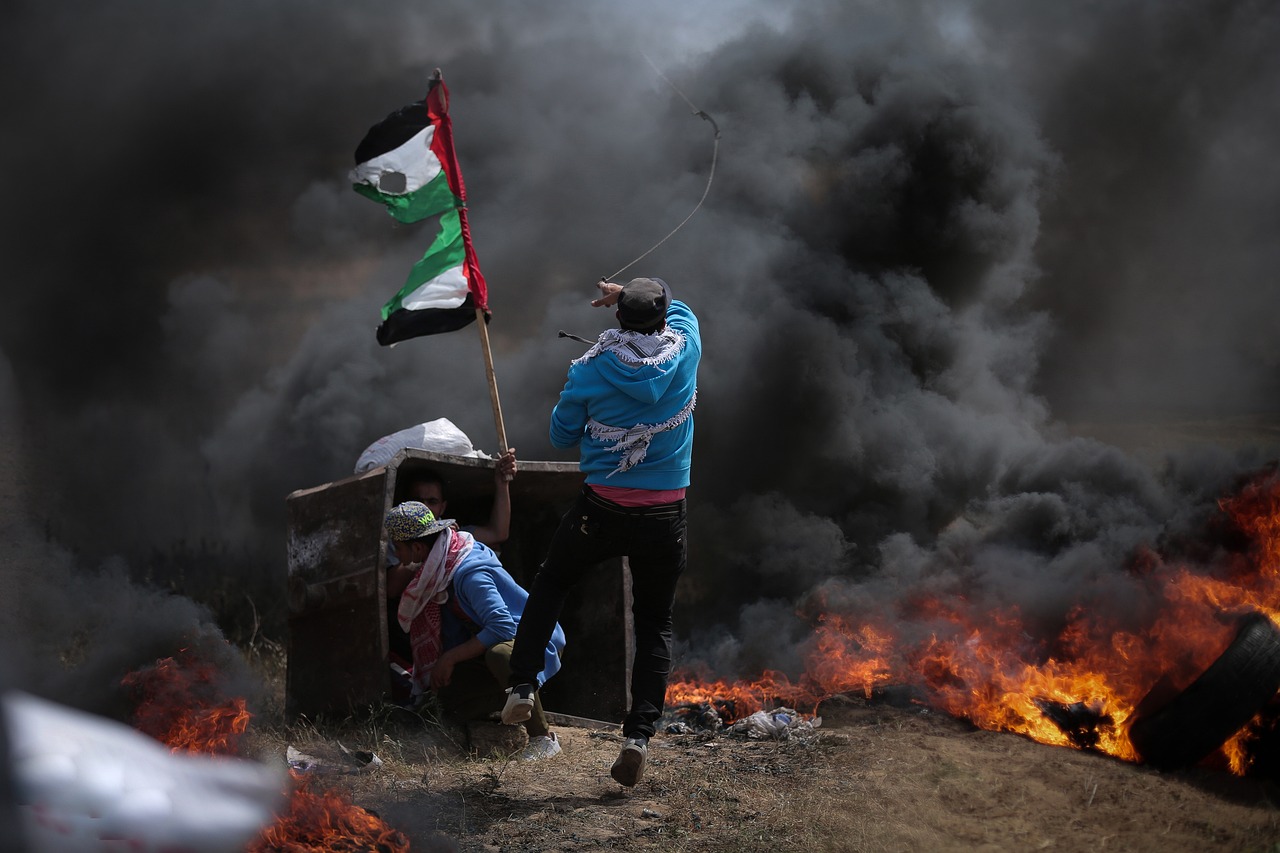
Israel-Gaza War: 2025 Conflict Update and In-Depth Analysis
Introduction
The Israel-Gaza war in 2025 has become one of the most closely watched conflicts globally. With each new announcement, each cease-fire breakdown and each humanitarian alert, the world asks: What now? This article provides a conflict update and in-depth analysis of the Israel-Gaza war in 2025 — what’s changed, where we are, what it means and what could come next. If you’re seeking a clear, authoritative, human-friendly overview of the Israel-Gaza war: this is it.
We’ll explore:
-
Current status of the Israel-Gaza war (2025 update)
-
Humanitarian and civilian impact in the Gaza Strip
-
Regional & geopolitical spin-offs
-
Possible pathways forward and what different scenarios could look like
-
Why this matters globally and how you should interpret the facts
Let’s start with the latest war status.
Current Status of the Israel-Gaza War (2025 Update)
Major milestones & timeline
-
The war began in earnest after the October 7, 2023, attack by Hamas on Israeli territory, prompting a large-scale response by Gaza Strip.
-
A cease-fire was reached in January 2025 but quickly broke down. On March 18, 2025, Israel launched a renewed offensive.
-
In April the Israeli government announced a novel security corridor, the “Morag Corridor”, effectively partitioning parts of Gaza.
-
As of early November 2025, multiple media outlets report extremely high civilian casualties and widespread destruction.
Current casualty and displacement figures
-
According to a Reuters summary, the Palestinian Ministry of Health has recorded over 60,000 killed in Gaza by July 2025, with nearly a third under age 18.
-
The latest live update from Al Jazeera reports that as of November 6, 2025, at least 68,875 Palestinians killed and ~170,679 wounded.
-
Tens of thousands of Israeli reservists have been mobilized ahead of further operations in Gaza City.
Key strategic developments
-
Israel’s proclaimed goal: dismantle Hamas’s infrastructure in Gaza, secure the release of hostages, and reshape the security landscape of the Gaza Strip.
-
Gaza is facing a near-complete humanitarian breakdown: many areas uninhabitable, aid severely restricted, famine-like conditions reported.
-
The corridor strategy (e.g., Morag Corridor) and expanded buffer zones signal a shift from short-term combat to longer-term territorial control.
Humanitarian & Civilian Impact in the Gaza Strip
Displacement and destruction
-
A huge share of Gaza’s 2.3 million population has been forcibly displaced multiple times.
-
According to academic monitoring: by June 2025 some 191,263 buildings – nearly three-fifths of total housing stock – were damaged or destroyed.
-
Schools, hospitals, cemeteries, religious and cultural sites have suffered heavy damage.
Famine, aid blockade and civilian suffering
-
The United Nations and humanitarian organizations have warned of “man-made famine” in parts of northern Gaza.
-
Blockades and restrictions: large parts of Gaza were cut off from aid for extended periods, elevating risks of malnutrition, disease and death.
-
Example: In July 2025 Israel’s offensive hit the humanitarian hub of Deir al-Balah, further imperiling aid routes and services.
Rights concerns and legal implications
-
International observers and NGOs raise concerns of war-crimes – citing indiscriminate bombing, civilian casualties, denial of aid.
-
The intensity and scale of destruction signal a deeper shift in how the Gaza conflict is being framed globally.
Regional & Geopolitical Consequences
Middle East ripple effects
-
The conflict has reignited tensions across the region: confrontations between Israel and Hezbollah in Lebanon, involvement of Iran-backed groups, Red Sea disruptions.
-
Many Arab states—and global powers—are under pressure to respond politically, diplomatically, militarily.
Global reactions & strategic positioning
-
Western nations face complex choices: balancing support for Israel’s security with humanitarian concerns and international law.
-
Emerging powers and blocs observe this conflict as a precedent for future urban warfare, territorial control strategies, and humanitarian norms erosion.
Longer-term implications for Gaza and Israel
-
If Israel keeps territory or creates long-term corridors inside Gaza, the post-war governance model of Gaza could be fundamentally altered.
-
For Israel: the war drains resources, impacts reservist mobilization, internal politics (hostage families, war fatigue) and global reputation.
-
For Gaza/Palestinians: the future of a Palestinian state, governance in Gaza, humanitarian rebuilding and national identity are under high stress.
Possible Scenarios Forward & What Comes Next
Scenario 1: Protracted war with incremental gains
-
Continuing ground & air operations, slow clearing of Gaza sectors, periodic cease-fires.
-
Result: heavy destruction, extended humanitarian crisis, long-term occupation burdens.
Scenario 2: Cease-fire and transition to reconstruction
-
Mediated cease-fire held (as per a proposed Egypt‐Qatar deal) for around 60 days with phased hostages release and aid flows.
-
Reconstruction begins, Gaza governance negotiated, partial Israeli withdrawal.
-
Result: Still heavy cost, but less active warfighting; major rebuilding needed.
Scenario 3: Collapse into no-war/no-peace stalemate
-
Formal war ends but Israel maintains substantial control, Gaza remains fragmented, humanitarian crisis persists.
-
Result: Entrenched conflict, Gaza effectively under quasi-martial conditions, risk of future flare-ups remains high.
What to watch for
-
Hostage negotiations: Each side’s moves greatly affect war trajectory.
-
Aid flow & humanitarian corridors: Breakdowns in aid could push crisis into deeper catastrophe.
-
International legal or diplomatic moves: War crimes investigations, UN’ actions could reshape post-war norms.
-
Israel’s domestic politics and reserve mobilization: War fatigue, protests and cost pressures may constrain Israel.
-
Gaza’s rebuilding and governance model: Who will run Gaza post-war and under what terms?
Why This Matters Beyond the Region
-
Urban warfare and high-civilian casualty conflicts are increasingly the model for major states – what happens in Gaza becomes a global prototype.
-
Humanitarian norms and war-law precedents are at stake: how the world responds sets future standards.
-
Global markets and states monitor the Middle East for risk: disruptions in oil, trade routes, investor confidence tie back to regional stability.
-
For audiences worldwide—including you—the human impact is real: civilians, children, infrastructure, futures. Understanding means greater empathy and informed engagement.
Conclusion
The Israel-Gaza war: 2025 conflict update and in-depth analysis reveal a war that is not simply episodic but foundational—shaping governance, humanitarian norms, regional stability and global perceptions. As I’ve shown: the current status is dire, civilian suffering widespread, regional consequences profound, and future scenarios uncertain.
In this moment, the human stakes are immense, and so are the geopolitical ones. For citizens, policymakers, observers and the global audience—staying informed, understanding the context, and bearing witness matter.
If you found this article helpful, please share it to raise awareness of a conflict that demands global attention.


